

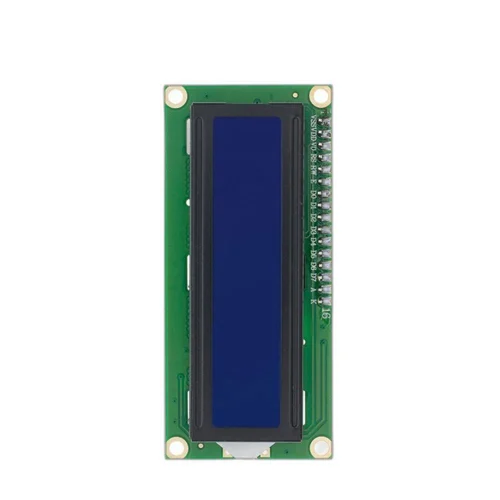
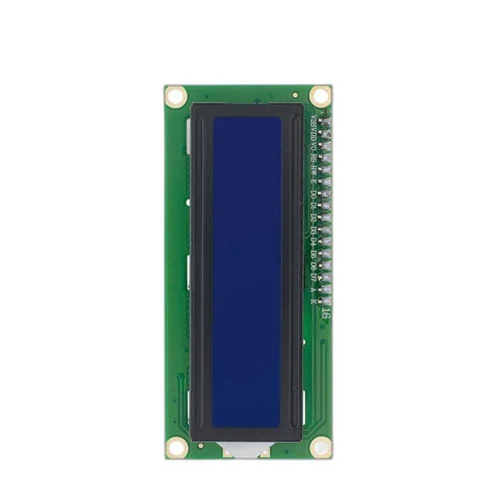
Display lcd1602 iic i2c
Product sellpoints
I2C interface: Simplifies wiring for microcontrollers.
16×2 display: Clear text and data output.
Arduino compatible: Works with popular development boards.
Blue backlight: Enhances visibility in low light.
Raspberry Pi support: Ideal for DIY projects.
500 L
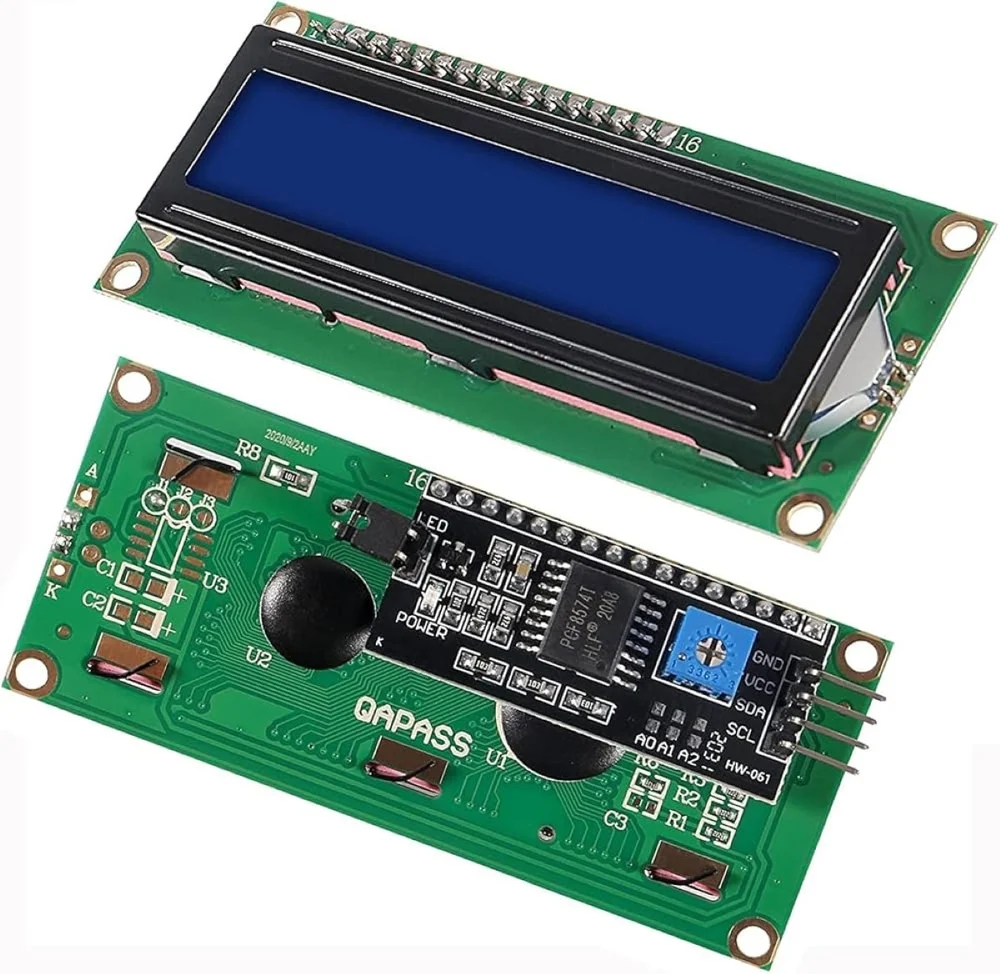
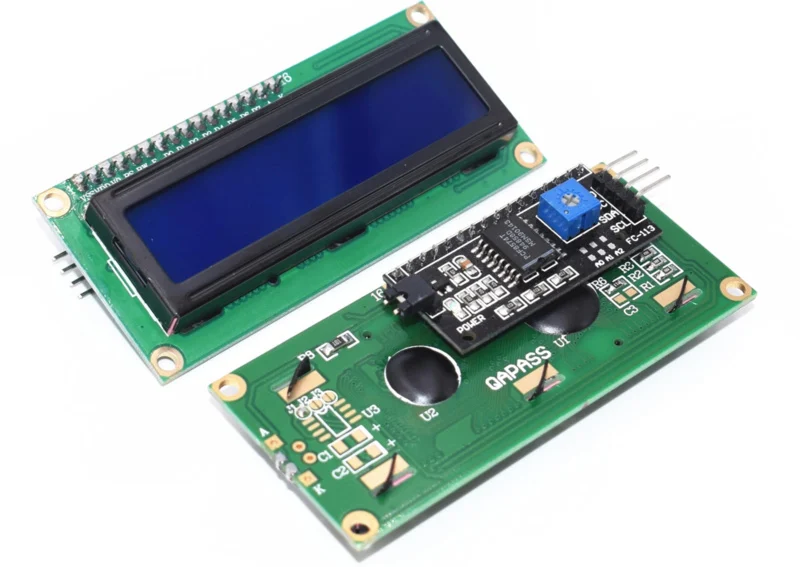
1602 LCD screen can display 2 lines x 16 characters, with i2c serial interface, blue display.
★Built-in independent potentiometer, backlight can be adjusted through the back potentiometer.
★Power supply: 5v; I2C address: 0x27; wiring method: GND—GND, VCC—VCC, SDA—A4, SCL—A5.
★Compatible with most development boards, such as for Arduino, for Raspberry pi, for Tinkerboard, for Nano pi, for Banana pi, for stm32, etc.
★Widely used in: Internet of Things, school electronics projects, smart buildings, maker DIY projects, etc., can display letters, characters, numbers, real-time clock or temperature.
Description
report
★1602 LCD screen can display 2 lines x 16 characters, with i2c serial interface, blue display.
★Built-in independent potentiometer, backlight can be adjusted through the back potentiometer.
★Power supply: 5v; I2C address: 0x27; wiring method: GND—GND, VCC—VCC, SDA—A4, SCL—A5.
★Compatible with most development boards, such as for Arduino, for Raspberry pi, for Tinkerboard, for Nano pi, for Banana pi, for stm32, etc.
★Widely used in: Internet of Things, school electronics projects, smart buildings, maker DIY projects, etc., can display letters, characters, numbers, real-time clock or temperature.
The 1/3pcs IIC 1602 LCD Display Module I2C Blue Backlight LCD1602 Display Screen Module for Arduino Raspberry Pi is a versatile and essential component for any electronics enthusiast or hobbyist working with microcontrollers. This module is designed to provide a clear and readable display for a wide range of projects, from simple data monitoring to more complex embedded systems. Whether you’re using an Arduino, a Raspberry Pi, or another microcontroller platform, this I2C LCD module offers a reliable and efficient way to display information.
One of the standout features of this 1602 I2C LCD module is its compatibility with various microcontroller boards. It supports the I2C communication protocol, which significantly reduces the number of pins required on your microcontroller. This makes it ideal for projects where pin availability is limited, such as when working with the Arduino Mega 2560 or the Raspberry Pi. The module is also compatible with the 1602A LCD, which is a common variant used in many DIY and industrial applications.
The blue backlight of the LCD screen adds a modern and visually appealing touch, making it easier to read the display in low-light environments. This feature is especially useful for projects that are used in different lighting conditions, such as home automation systems, weather stations, or custom-built devices. The blue backlight also gives the module a professional look, which can be beneficial if you’re presenting your project to others or showcasing it in a public setting.
In terms of functionality, the 1602 I2C LCD module is straightforward to use. It comes with a built-in I2C interface, which means you can connect it to your microcontroller using just two wires—SCL and SDA. This simplifies the wiring process and reduces the risk of connection errors. Many users find that this module is much easier to set up compared to traditional parallel LCDs, which require more pins and more complex wiring.
From a technical standpoint, the 1602 I2C LCD module is based on the standard 16×2 character display. This means it can display two lines of 16 characters each, which is sufficient for most basic display needs. The module is also compatible with a wide range of programming libraries, including the LiquidCrystal_I2C library for Arduino, which makes it easy to integrate into your projects. This library allows you to control the display with simple commands, such as printing text, clearing the screen, or moving the cursor.
In my personal experience, this module has been a reliable choice for several projects. I’ve used it in a temperature and humidity monitoring system connected to a Raspberry Pi, where it displayed real-time data in a clear and readable format. I’ve also used it with an Arduino Mega 2560 to create a custom digital clock, which was a great way to learn about I2C communication and LCD interfacing. The module’s performance has been consistent, and I’ve had no issues with display flickering or communication errors.
Experts in the field of embedded systems and microcontroller programming often recommend the 1602 I2C LCD module for its simplicity, reliability, and cost-effectiveness. It’s a popular choice among hobbyists and professionals alike, especially for projects that require a basic display without the need for a full graphical interface. The module’s compatibility with both Arduino and Raspberry Pi makes it a versatile option for a wide range of applications.
When it comes to installation, the 1602 I2C LCD module is relatively easy to set up. You’ll need to connect the I2C pins to your microcontroller and then use a library to control the display. Most users find that the setup process takes only a few minutes, especially if they’re using a well-documented library like LiquidCrystal_I2C. The module also comes with a built-in I2C address, which means you don’t have to worry about configuring it manually unless you’re using multiple modules in the same project.
Another advantage of this module is its durability. The LCD screen is designed to withstand a wide range of operating conditions, making it suitable for both indoor and outdoor applications. The blue backlight is also energy-efficient, which is important for battery-powered projects. This makes the module a great choice for portable or remote applications where power consumption is a concern.
In terms of performance, the 1602 I2C LCD module delivers a clear and sharp display with minimal latency. The response time is fast enough for most applications, and the characters are well-defined and easy to read. The module also supports a wide range of character sets, which means you can display different languages and symbols if needed.
For those who are new to working with LCD modules, the 1602 I2C LCD is an excellent starting point. It’s simple to use, well-documented, and widely supported by the maker community. There are plenty of tutorials and guides available online that can help you get started, and the module’s compatibility with popular platforms like Arduino and Raspberry Pi makes it easy to integrate into your projects.
In conclusion, the 1/3pcs IIC 1602 LCD Display Module I2C Blue Backlight LCD1602 Display Screen Module for Arduino Raspberry Pi is a reliable and versatile display solution for a wide range of applications. Its compatibility with multiple microcontroller platforms, ease of use, and clear display make it a popular choice among hobbyists and professionals. Whether you’re building a simple data display or a more complex embedded system, this module is a valuable addition to your electronics toolkit.
Based on 0 reviews
Be the first to review “Display lcd1602 iic i2c”
Produkte të afërt
-
Arduino, Education, Electronic Components
harduino Mega 2560 Rev3
The harduino Mega 2560 is a microcontroller board based on the ATmega2560. It has 54 digital input/output pins (of which 15 can be used as PWM outputs), 16 analog inputs, 4 UARTs (hardware serial ports), a 16 MHz crystal oscillator, a USB connection, a power jack, an ICSP header, and a reset button. It contains everything needed to support the microcontroller; simply connect it to a computer with a USB cable or power it with a AC-to-DC adapter or battery to get started. The Mega 2560 board is compatible with most shields designed for the Uno and the former boards Duemilanove or Diecimila.
SKU: n/a -
Electronic Components, Hardware, Solder, Work Tools
solder ball ppd alloy sn63pb37 0.4mm
Solder Balls BGA Reballing Soldering Accessories for Chip Planting Laptop Phone Repair
- Extensive Usage: Widely used in chip planting, connecting semiconductor wafers and circuit templates and PCB boards, and transmitting electronic with ultrasmall ball tin electronic parts, etc.
- Description: The tin ball is mainly connected with the semiconductor chip, the circuit template and the PCB board, and the ultra-small ball-type tin electronic part that transmits the electronic .
- Practical Tool: Small size, easy to carry and store, convenient to use and with good performance, 100 thousand grains, a large number, can meet your use and replacement needs, very practically.
- Premium Quality: The solder with tin balls is more and can help you solder effectively. Adding trace elements to the solder ball can improve the oxidation ability and reliability of the solder ball pit.
SKU: n/a -
Electronic Components, electronics tools, Hardware, Work Tools
Pro’sKit MT-3202 Digital Clamp Meter
Pro’sKit tools solutions MT-3202 3-3/4 Digital Clamp Meter ACV ACA
True RMS Measurement Full Function Test NCV Detection (MT-3202)
ACV ACA True RMS Measurement
Full Function Test
NCV Detection
SKU: n/a


There are no reviews yet.